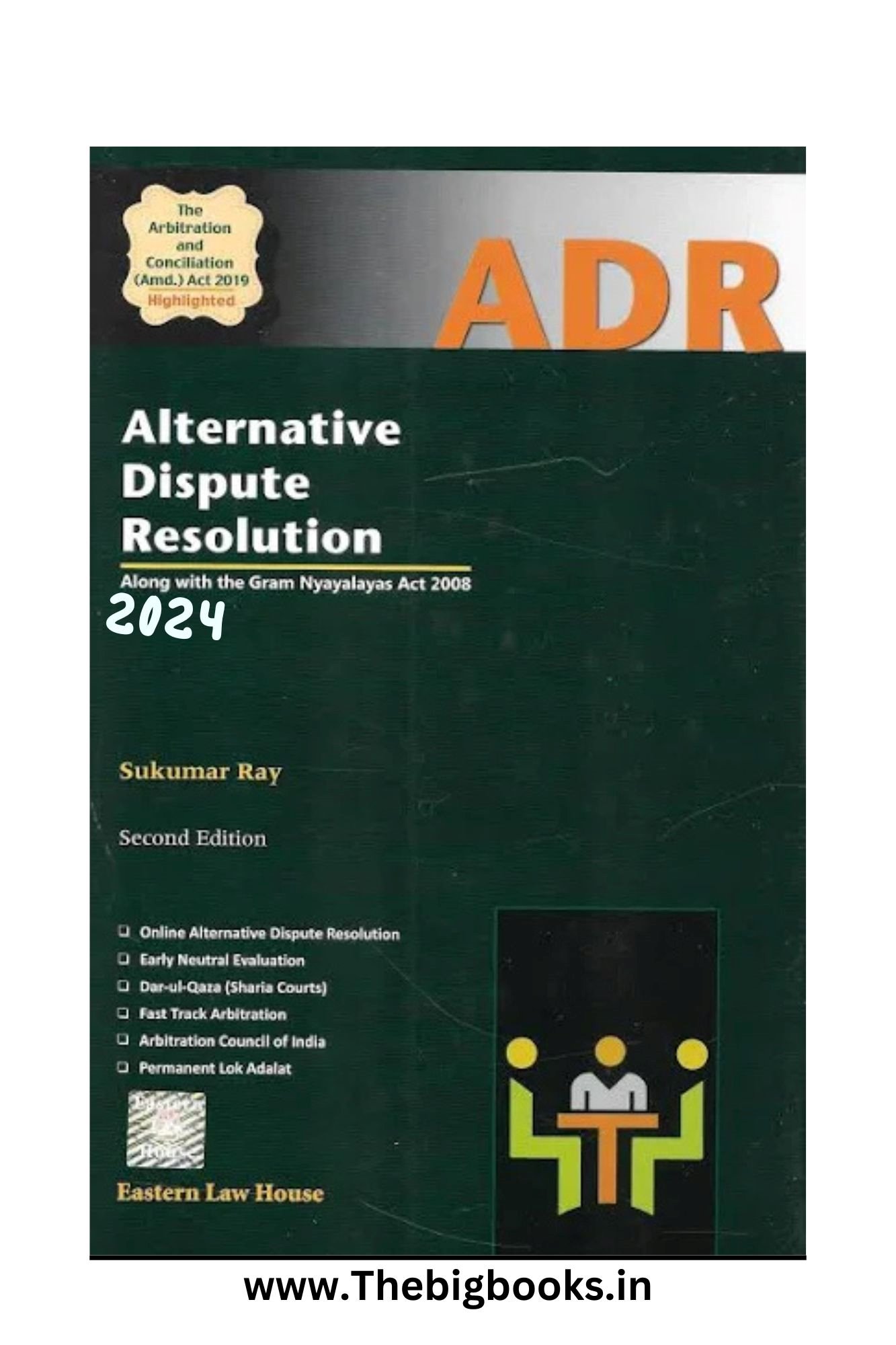
Altenative Dispute Resolution: Along With The Gram Nyayalayas Act.
| Author : | SUKUMAR RAY |
|---|
Altenative Dispute Resolution: Along With The Gram Nyayalayas Act.


Estimate Delivery Times: 3-5 Business Days.
Return Within 4 Days of Purchase. Duties & Taxes are Non-Refundable.
Share This Product
-
Introduction to Alternative Dispute Resolution (ADR):
- The book begins by explaining the concept of ADR, highlighting its importance in reducing the burden on courts and facilitating faster resolution of disputes. ADR is particularly effective in civil, commercial, and family disputes.
- It outlines the major forms of ADR, including mediation, arbitration, conciliation, and negotiation, providing a detailed explanation of each method.
- ADR is emphasized as a process that is voluntary, flexible, and confidential, designed to foster cooperation between the parties involved.
-
Mediation and Conciliation:
- The book discusses mediation and conciliation as two primary forms of ADR, emphasizing their informal and non-adversarial nature.
- Mediation is explained as a process where a neutral third party (the mediator) helps the disputing parties reach a mutually agreeable solution. Conciliation is similar but generally involves a more active role for the conciliator in proposing solutions.
- The effectiveness of mediation and conciliation in resolving disputes without the need for litigation is highlighted, with examples from family disputes, labor disputes, and commercial conflicts.
-
Arbitration:
- The book provides a detailed explanation of arbitration, which involves the resolution of disputes by an arbitrator or a panel of arbitrators who make binding decisions.
- It explores the Arbitration and Conciliation Act, 1996, which governs arbitration proceedings in India. This Act is designed to provide a framework for resolving disputes through arbitration and conciliation in a time-bound and efficient manner.
- The book also covers international arbitration and the increasing role of India in the global ADR landscape, including the enforcement of foreign arbitral awards.
-
Negotiation:
- The book briefly touches upon negotiation as a self-directed method of resolving disputes where the parties directly communicate with each other to reach a settlement.
- The role of the lawyer or legal expert in facilitating negotiation and ensuring fair and equitable outcomes is explored, particularly in commercial and business disputes.
-
Benefits of ADR:
- The book outlines the numerous advantages of ADR, including its cost-effectiveness, faster resolution of disputes, preservation of relationships, and privacy.
- It highlights how ADR methods are often more suitable for cases where the parties wish to maintain a continuing relationship (e.g., family disputes, business partnerships).
- The reduced burden on the judiciary and the ability of ADR to address a wider range of cases, including small claims, are also emphasized.
-
The Gram Nyayalayas Act, 2008:
- A significant portion of the book is dedicated to the Gram Nyayalayas Act, 2008, which aims to provide access to affordable and effective justice to rural populations in India.
- The Act establishes Gram Nyayalayas (village courts) at the village level, allowing for the resolution of disputes involving land, property, and personal matters in a cost-effective and less formal setting.
- The book covers the powers, functions, and jurisdiction of Gram Nyayalayas, explaining how they handle cases in a simplified manner and offer ADR mechanisms like mediation and conciliation.
- It also discusses the composition of Gram Nyayalayas, which are presided over by a Nyayadhikari (judge) with the assistance of paralegals and mediators who facilitate dispute resolution in rural communities.
-
Role of ADR in the Indian Legal System:
- The book discusses the integration of ADR into the Indian legal system, noting that courts have increasingly encouraged the use of ADR methods through court-annexed mediation and arbitration. The role of the Supreme Court of India and various High Courts in promoting ADR is examined.
- It highlights the National Legal Services Authority (NALSA) and other institutions' efforts to promote ADR and create awareness about alternative mechanisms for dispute resolution.
-
Challenges in ADR:
- The book addresses the challenges faced by ADR in India, such as the lack of awareness among rural populations, the slow implementation of Gram Nyayalayas, and resistance to alternative methods of dispute resolution.
- It also discusses issues related to the enforceability of ADR awards, especially in non-binding ADR mechanisms like mediation and conciliation.
-
Case Studies and Judicial Precedents:
- The book includes several case studies and judicial precedents that highlight the successful use of ADR and Gram Nyayalayas in resolving disputes.
- The book explores landmark judgments that have recognized the validity of ADR processes and affirmed the importance of non-litigation methods in the Indian legal context.