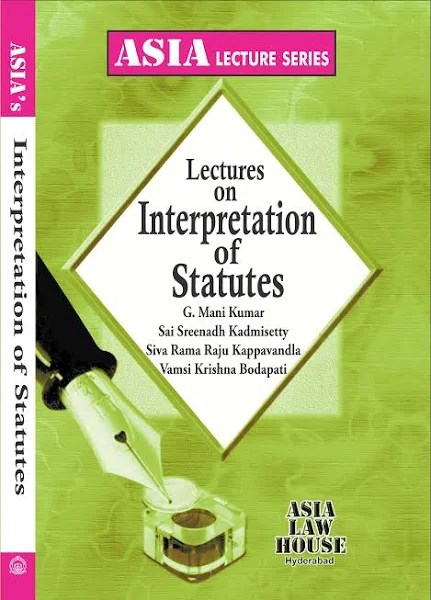
Lectures On Interpretation Of Statues.
| Author : | G. MANI KUMAR |
|---|
Lectures On Interpretation Of Statues.


Estimate Delivery Times: 3-5 Business Days.
Return Within 4 Days of Purchase. Duties & Taxes are Non-Refundable.
Tags: ACADEMIC LAW BOOKS, Asia (Lect.) Law Series, Interpretation of Statutes
Share This Product
-
Introduction to Statutory Interpretation:
- The book begins with a broad overview of what statutory interpretation is and why it is essential in the legal system. It explains that interpretation is the process through which courts ascertain the meaning of statutes when the language is unclear or ambiguous.
- The role of judges in interpreting laws and how statutory interpretation helps in bridging the gap between the legislature’s intent and the application of the law in real-life situations are discussed.
-
Principles of Interpretation:
- Literal Rule: The literal rule advocates that statutes should be interpreted using the ordinary meaning of the words used, unless it leads to an absurd result. The book discusses how this rule is applied when the text is clear and unambiguous.
- Golden Rule: This rule is an extension of the literal rule and allows judges to depart from the literal meaning when it would result in an absurd or unjust outcome. The book explains situations where the golden rule is applied to avoid absurdities in legal interpretation.
- Mischief Rule: This rule focuses on identifying the "mischief" or problem that the statute was intended to address. The interpretation focuses on the legislative intent behind the statute. The book elaborates on how this rule helps courts give effect to the law’s purpose.
- Purposive or Intentional Rule: Under this rule, judges seek to interpret the statute in a way that fulfills the purpose or intention of the legislature. The book highlights how courts use this rule to ensure that the law achieves its objectives, especially in the case of ambiguous language.
-
Internal and External Aids to Interpretation:
- Internal Aids: These include the title, preamble, and sections of the statute itself, which can guide the interpretation. The book explains how reading the entire statute in context helps in understanding its purpose.
- External Aids: These include the use of parliamentary debates (Hansard), historical context, earlier case law (precedent), and legal dictionaries. The book discusses how external aids can be helpful in resolving ambiguities when internal aids are insufficient.
-
Role of Preamble and Title:
- The book examines the importance of the preamble and the title of a statute as external aids in interpretation. While the preamble states the purpose of the law, the title often reflects the general scope of the statute. Courts may refer to these to ascertain the legislative intent.
-
Maxims of Interpretation:
- The book discusses several Latin maxims commonly used in statutory interpretation, such as:
- Ejusdem Generis (of the same kind): When general words follow specific words, the general words are interpreted to include only things of the same kind as the specific words.
- Noscitur a Sociis (a word is known by the company it keeps): The meaning of a word can be clarified by the words surrounding it.
- Expressio unius est exclusio alterius (the express mention of one thing excludes others): If something is explicitly mentioned in a statute, other items not mentioned are presumed to be excluded.
- The book discusses several Latin maxims commonly used in statutory interpretation, such as:
-
Presumption in Statutory Interpretation:
- The book outlines various presumptions that courts apply when interpreting statutes, such as the presumption that statutes do not operate retrospectively unless clearly stated, and the presumption that legislation does not infringe on fundamental rights unless explicitly specified.
-
Construction of Ambiguous Provisions:
- The book deals with how courts handle statutes with ambiguous provisions. It discusses the use of interpretation clauses and judicial precedents to resolve uncertainty and give statutes a reasonable and practical application.
- It also discusses the role of courts in balancing between strict adherence to the letter of the law and ensuring that the spirit of the law is upheld.
-
Role of Legislative History:
- The book emphasizes the importance of understanding the legislative history behind a statute, including the reports of law commissions and parliamentary debates. This history helps judges interpret the statute in line with the original intent of the lawmakers.
-
Recent Trends in Statutory Interpretation:
- The book concludes with a discussion on recent developments in statutory interpretation, particularly the growing influence of human rights and constitutional principles in the interpretation of statutes, and how the courts have adopted a more flexible and purposive approach to interpretation in certain cases.