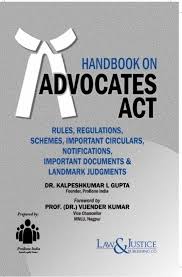
L&J Handbook on Advocates Act (Rules, Regulations, Schemes, Important Circulars, Notifications, Important Documents & Landmark Judgements) - Edition 2025
| Author : | DR. KALPESHKUMAR L GUPTA |
|---|
Handbook on Advocates Act by Kalpeshkumar L. Gupta offers a comprehensive and practical explanation of the Advocates Act, 1961, covering enrolment of advocates, Bar Council powers, professional ethics, rights and duties of advocates, and disciplinary mechanisms. Designed for law students, legal practitioners, and judicial service aspirants, the book provides clear insights into the statutory and ethical framework governing the legal profession in India.


Tags: Landmark Judgements, ADVOCATES ACT
Handbook on Advocates Act by Kalpeshkumar L. Gupta is a detailed and authoritative guide to the Advocates Act, 1961—the foundational legislation governing advocates, legal practice, and professional conduct in India. The book presents a structured and comprehensive understanding of the regulatory framework applicable to advocates and the functioning of Bar Councils at both national and state levels.
This handbook clearly explains the powers, duties, and responsibilities of the Bar Council of India and State Bar Councils, including their roles in enrolment, professional standards, legal education, and disciplinary control. The author elaborates on the statutory provisions relating to the classification of advocates, senior advocates, right to practice before courts, and the certificate of practice requirements.
A significant portion of the book is devoted to professional ethics and misconduct, providing practical illustrations, relevant judgments, and a detailed overview of disciplinary procedures. Readers gain insight into what constitutes misconduct, how disciplinary committees operate, and the appellate mechanisms available within the legal framework.
The book also discusses contemporary issues affecting the legal profession such as lawyers’ strikes, regulation of legal education, ethical challenges, and the impact of technology on advocacy. By blending statutory interpretation with judicial analysis and practical guidance, the book becomes highly useful for academic understanding as well as professional reference.
Written in a clear, accessible, and examination-friendly style, this book is ideal for law students, practicing advocates, bar council examinees, judicial service aspirants, and academicians seeking a complete and updated understanding of the Advocates Act. Its detailed coverage, case law references, and practical approach make it an essential resource for anyone studying or practicing within the Indian legal system.