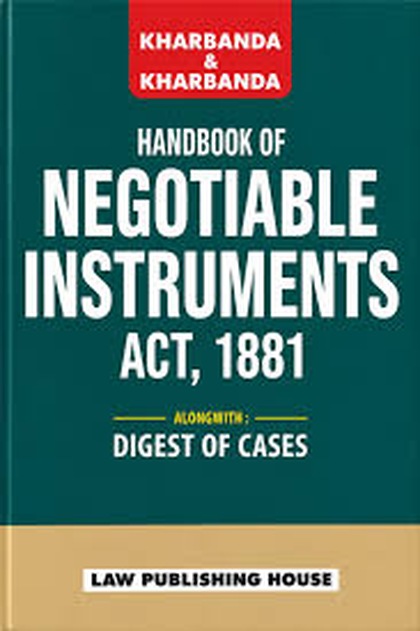
LPH's Kharbanda & Kharbanda's Handbook of Negotiable Instruments Act, 1881 (Alongwith Digest of Cases) - Edition 2026
| Author : | KHARBANDA & KHARBANDA |
|---|
| Kharbanda & Kharbanda's Handbook of Negotiable Instruments Act, 1881, alongwith Digest of Cases (Law Publishing House, Edition 2026) gives the text of the Act with the decisions of the Supreme Court and the High Courts digested section-wise. It covers promissory notes, bills of exchange and cheques, holder and holder in due course, negotiation and endorsement, presentment and payment, discharge, dishonour and notice of dishonour, crossing of cheques and the protection of the paying and collecting banker, the presumptions under sections 118 and 139, and the whole of Chapter XVII on the dishonour of cheques — section 138 and its ingredients, the thirty-day notice and the limitation for complaint, territorial jurisdiction under section 142(2), vicarious liability of directors under section 141, interim compensation under section 143A and deposit in appeal under section 148, summary trial and compounding. Hardbound. ISBN 9788189639174. |


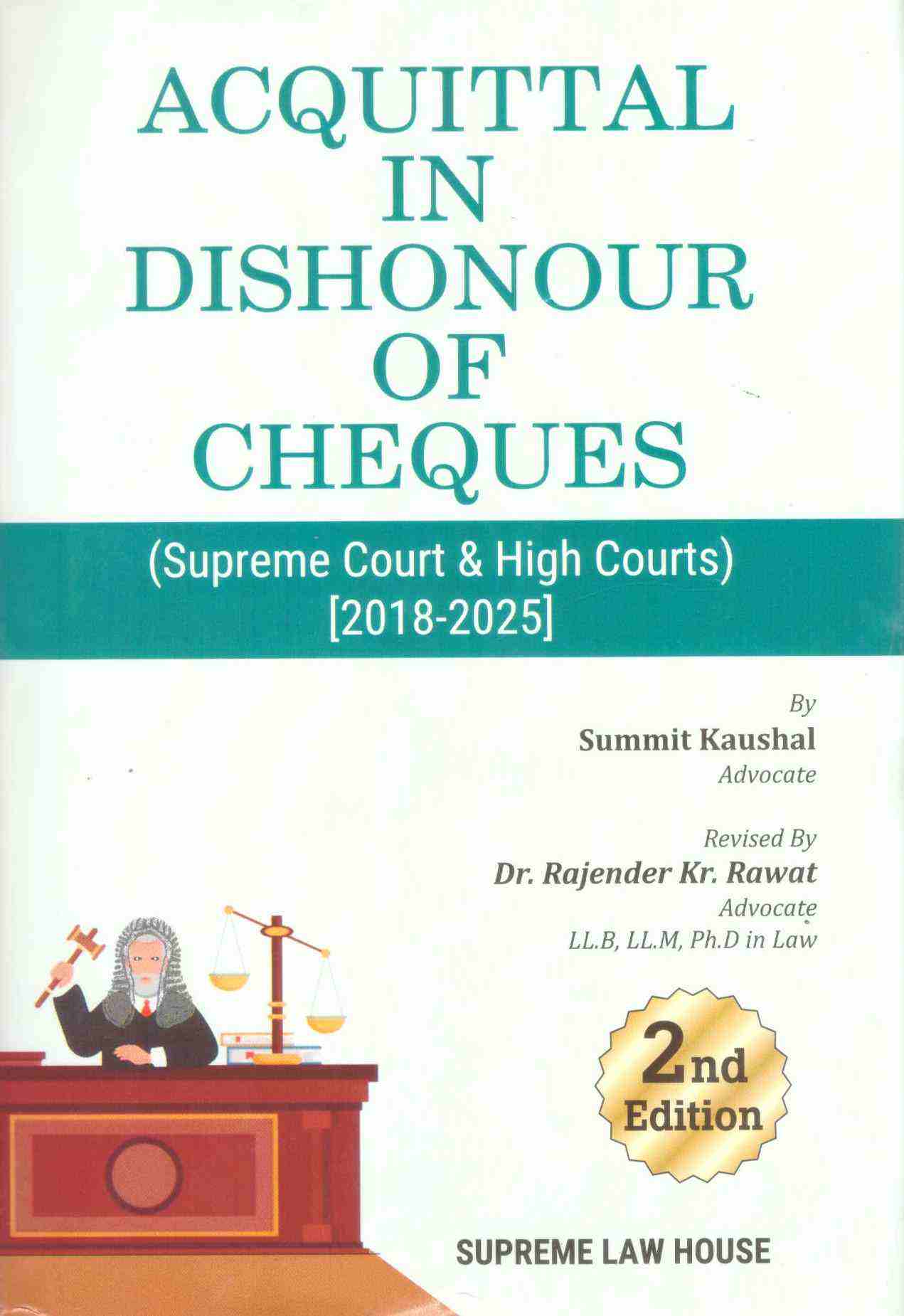
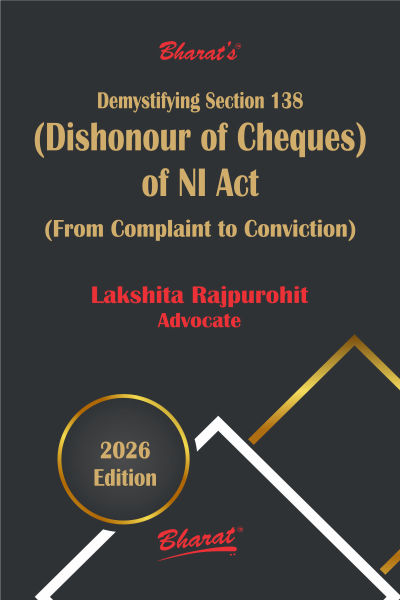
Tags: Banking Law, Negotiable Instrument Act, Dishonour Of Cheques Of NI Act ( From Complaint To Conviction), Acquittal in Dishonour of Cheques
Handbook of Negotiable Instruments Act, 1881 — Alongwith Digest of Cases by Kharbanda & Kharbanda (V.K. Kharbanda and Vipul Kharbanda), published by Law Publishing House, sets out the Negotiable Instruments Act together with a digest of the decided cases under it. This is the Edition 2026. Hardbound. ISBN 9788189639174.
Nearly all litigation under this Act is now litigation under Chapter XVII — the dishonour of cheques. Section 138 complaints run into the lakhs and occupy a substantial share of the magistracy's docket, and the questions that decide them are narrow and repetitive: was the notice of demand served in time, was the complaint filed within the period, who is the payee entitled to complain, when is a director vicariously liable under section 141, and how far does the presumption under section 139 carry the complainant. Each is settled by case law rather than by the text, which is why a digest of cases bound in with the Act is the form practitioners want.
Key Features
- Edition 2026, published by Law Publishing House
- Text of the Negotiable Instruments Act, 1881 as amended
- Digest of cases of the Supreme Court and the High Courts, arranged section-wise
- Full treatment of Chapter XVII — dishonour of cheques (sections 138 to 147)
- Handbook format, sized for the court bag rather than the shelf
- Authored by the Kharbandas, whose digests and handbooks are long established in practice
- Hardbound · English
Coverage
Negotiable Instruments Generally. The definition and characteristics of a negotiable instrument; promissory notes, bills of exchange and cheques; inland and foreign instruments; ambiguous and inchoate instruments; and instruments payable on demand or after a fixed time.
Parties and Capacity. Drawer, drawee, payee, holder and holder in due course; capacity to make and endorse; agency; and liability of a legal representative.
Negotiation and Endorsement. Negotiation by delivery and by endorsement; blank, full, restrictive and conditional endorsements; and the rights acquired by a holder in due course.
Presentment, Payment and Interest. Presentment for acceptance and for payment, time and place of presentment, excuses for non-presentment, payment in due course, and interest.
Discharge and Dishonour. Discharge from liability, material alteration, dishonour by non-acceptance and by non-payment, notice of dishonour, noting and protest.
Crossing of Cheques. General and special crossing, "not negotiable" and "account payee" crossings, and the protection of the paying and collecting banker.
Presumptions. The presumptions under section 118 as to consideration, date and time of acceptance, and the presumption in favour of the holder under section 139 — and how each may be rebutted.
Chapter XVII — Dishonour of Cheques. Section 138 and its ingredients — a legally enforceable debt or liability, return of the cheque unpaid, the notice of demand within thirty days, failure to pay within fifteen days, and the complaint within one month; the territorial jurisdiction of the court under section 142(2); section 141 and the liability of companies, directors, partners and signatories; section 143A interim compensation and section 148 deposit in appeal; summary trial, evidence on affidavit, compounding, and the settlement of cheque bounce cases.
Digest of Cases. The decisions of the Supreme Court and the High Courts arranged against the section they construe, for direct reference in court.
Who Should Buy This Book?
- Advocates conducting section 138 cheque bounce prosecutions and defences
- Criminal practitioners in magistrates' courts
- Civil and commercial lawyers in recovery and suit matters on instruments
- Judicial Magistrates and court staff handling NI Act dockets
- Bank legal and recovery departments, and branch officials
- NBFC and finance company legal teams
- Corporate legal and credit control teams
- Candidates for judicial service and law officer examinations
- LL.B. students taking banking and negotiable instruments law
- Bar association and institutional libraries
Why Choose This Book?
A cheque bounce matter is won or lost on points that are almost entirely procedural, and almost entirely governed by precedent — the date the notice was despatched, the address it went to, whether the complaint names the company as an accused, whether the averment against the director is in the required form. A handbook with the cases digested under each section puts the answer to those points within reach during the hearing itself, which a full-length commentary does not.
The format is the other reason. This is a single-volume handbook rather than a treatise: the Act and the digest in one portable book, which for a practitioner running several NI matters in a morning is the difference between carrying the authority and leaving it in chambers.