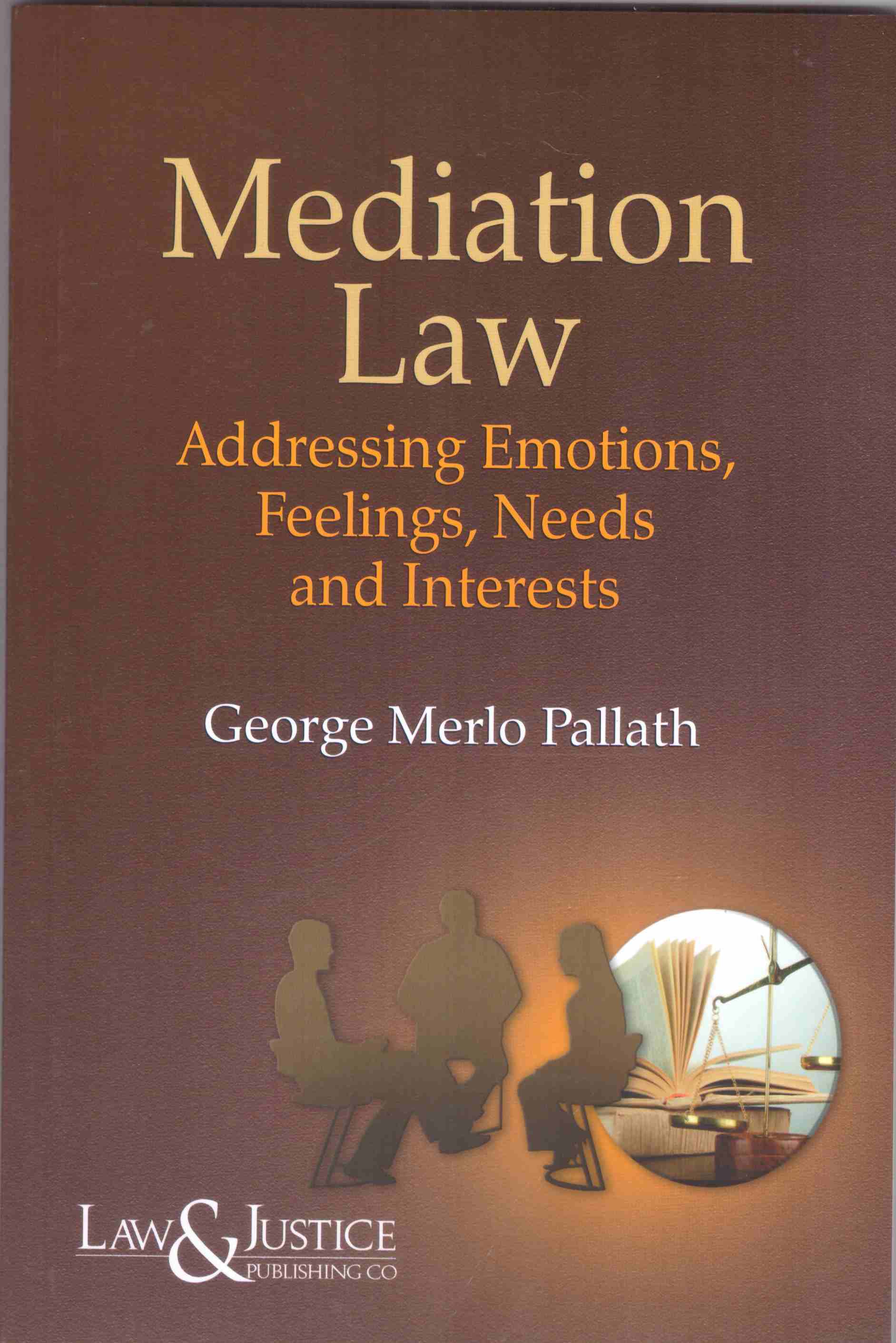
Mediation Law ( Addressing Emotions, Feelings, Needs And Interests ) 1st Edition 2024
| Author : | George Merlo Pallath |
|---|
Mediation Law ( Addressing Emotions, Feelings, Needs And Interests ) 1st Edition 2024


144

English

1st Edition 2024

Estimate Delivery Times: 3-5 Business Days.
Return Within 4 Days of Purchase. Duties & Taxes are Non-Refundable.
Tags: LEGAL BOOKS, Mediation Law
Share This Product
1. Emotions and Feelings
- Role in Mediation: Emotions play a significant role in conflict, as they often drive the intensity of disputes. Anger, frustration, hurt, or fear can cloud judgment, escalate tensions, and hinder productive communication.
- Mediation Approach: Mediators are trained to acknowledge and validate the emotions of all parties without taking sides. By allowing participants to express their feelings in a safe environment, mediators can help reduce emotional barriers and shift focus to more constructive dialogue.
2. Needs
- Definition: Needs refer to the basic, often non-negotiable elements that each party requires to resolve the conflict, such as financial security, emotional validation, or safety.
- Mediation Focus: Mediators work with participants to clarify their needs and distinguish them from their positions (what they say they want). Understanding each party’s essential needs helps find solutions that address the root causes of the dispute.
3. Interests
- Definition: Interests go deeper than positions. While positions are what parties say they want, interests are the reasons or motivations behind those desires. Interests reflect the underlying desires, values, and concerns that drive the positions.
- Mediation Focus: Mediators aim to uncover the parties' interests to explore creative solutions that satisfy the underlying needs of all participants, rather than just focusing on surface-level demands.
4. Mediation Law and Process
- Mediation is a structured, voluntary process aimed at helping parties reach mutually agreeable solutions. Legal frameworks for mediation may vary by jurisdiction, but most encourage a non-adversarial, confidential, and collaborative approach.
- Legal professionals often incorporate mediation into dispute resolution strategies, especially in family law, commercial disputes, and labor conflicts, where emotions and personal interests play a pivotal role.
5. Benefits of Addressing Emotions, Needs, and Interests
- Better Resolution: By addressing both the emotional and substantive aspects of a conflict, mediation can lead to more comprehensive, durable, and mutually satisfying agreements.
- Enhanced Communication: Mediation encourages open dialogue where participants feel heard, reducing miscommunication and fostering empathy.
- Empowerment: Participants are empowered to take an active role in finding solutions, rather than having a decision imposed by a judge or arbitrator.