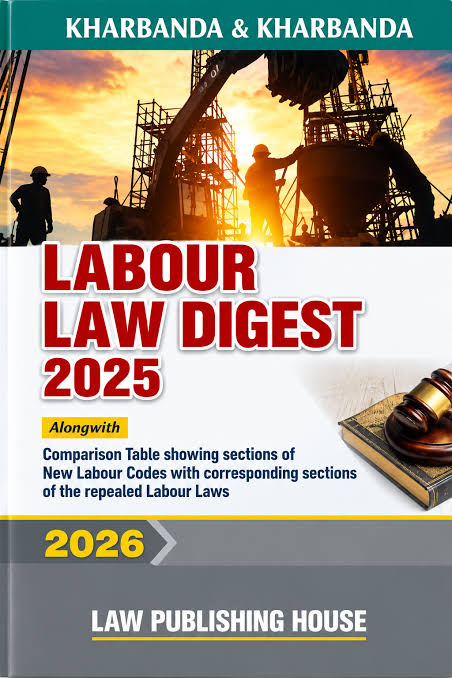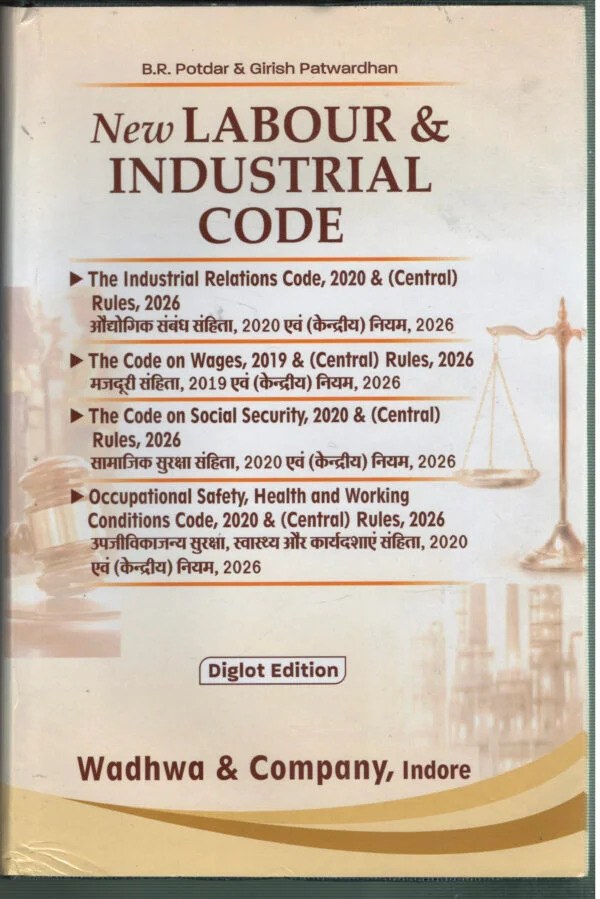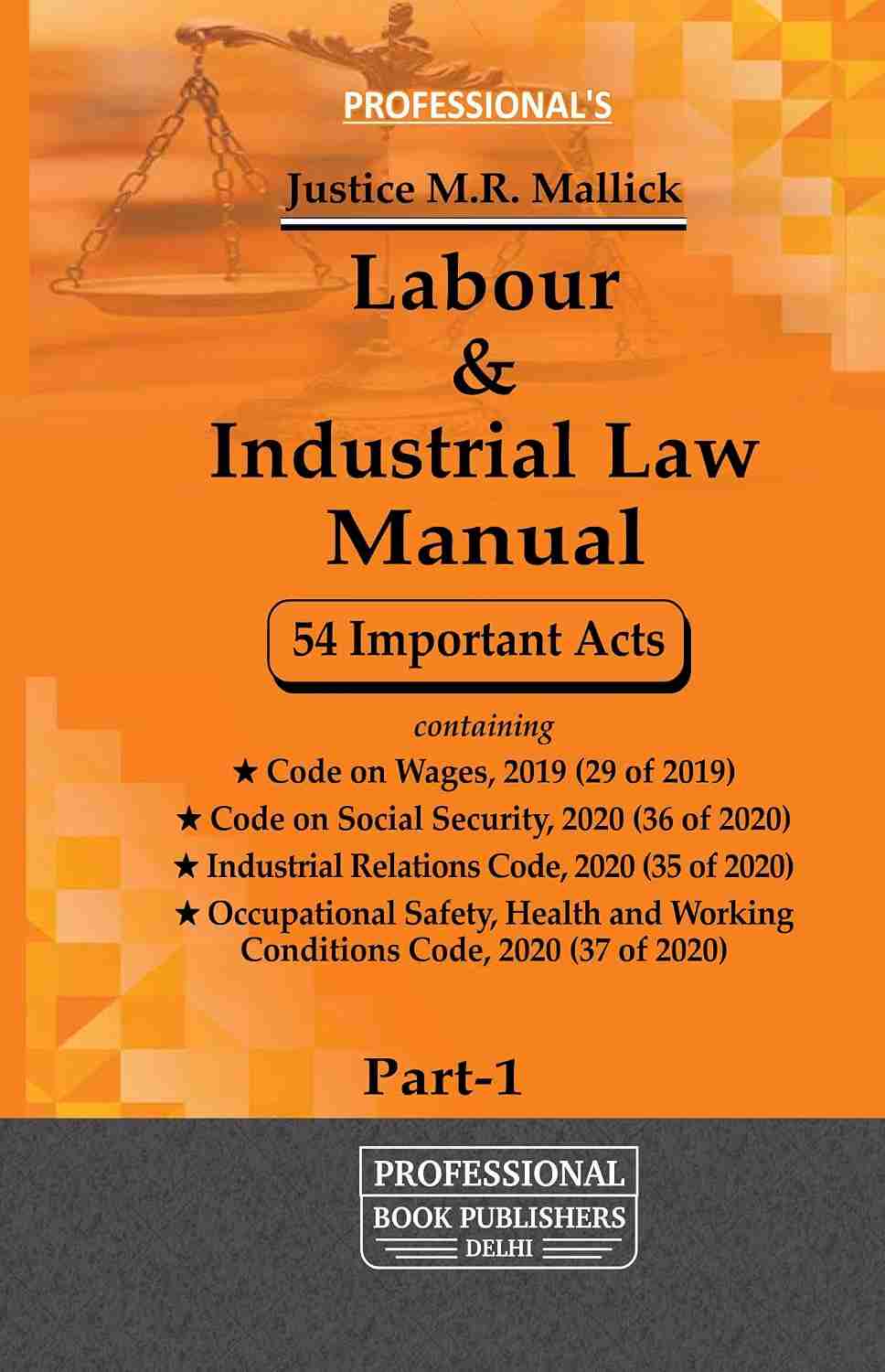
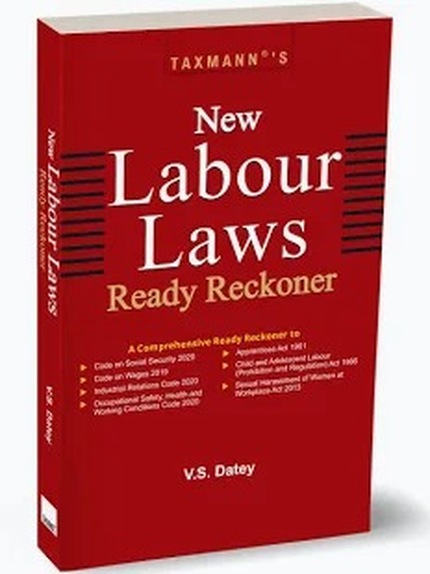
Taxmann's New Labour Laws Ready Reckoner - Edition 2026
| Author : | V. S. Datey |
|---|
| Taxmann's New Labour Laws Ready Reckoner by V.S. Datey (2026 Edition) is a desk reference to the four Labour Codes as they now operate, following the Codes coming into force on 21 November 2025 in place of twenty-nine enactments. It covers the Code on Wages, 2019 including the uniform definition of "wages" and its effect on gratuity, provident fund and bonus; the Industrial Relations Code, 2020 including standing orders, negotiating unions, lay-off, retrenchment and closure; the Code on Social Security, 2020 including EPF, ESIC, gratuity, maternity benefit and the new provisions for gig, platform and unorganised workers; and the Occupational Safety, Health and Working Conditions Code, 2020 including registration and licensing, working hours and leave, contract labour and inter-State migrant workers. It also covers the three statutes the Codes did not subsume — the Apprentices Act, 1961, the Child and Adolescent Labour Act, 1986 and the POSH Act, 2013. Paperback. ISBN 9789375617402. |


Tags: Labour Law, The Code on Wages,, The Industrial Relations Code, Labour Codes
Taxmann's New Labour Laws Ready Reckoner by V.S. Datey is a practitioner's desk reference to the four Labour Codes as they now operate, together with the labour statutes that survive alongside them. This is the 2026 Edition. Paperback. ISBN 9789375617402.
The Codes were brought into force on 21 November 2025, replacing twenty-nine separate enactments with four. For an employer that means the compliance calendar, the registers, the returns, the thresholds and the definitions all changed at once — and that the guidance built up over decades under the old Acts now has to be re-stated against new sections. A ready reckoner is the form in which that is most usable: the proposition first, the statutory source immediately under it, and the position stated as it currently stands.
A Comprehensive Ready Reckoner to
- Code on Social Security, 2020
- Code on Wages, 2019
- Industrial Relations Code, 2020
- Occupational Safety, Health and Working Conditions Code, 2020
- Apprentices Act, 1961
- Child and Adolescent Labour (Prohibition and Regulation) Act, 1986
- Sexual Harassment of Women at Workplace (Prevention, Prohibition and Redressal) Act, 2013
Key Features
- 2026 Edition, published by Taxmann
- Covers all four Labour Codes in a single volume
- Also covers the three principal labour statutes that the Codes did not subsume — the Apprentices Act, the Child and Adolescent Labour Act and the POSH Act
- Ready-reckoner method — each proposition stated with its statutory source cited to the proviso or Explanation
- Judicial authority set alongside the provisions
- Authored by V.S. Datey, whose Taxmann reckoners on GST, company law and LLP are standard desk references
- Paperback · English
Coverage
Code on Wages, 2019. The uniform definition of "wages" and the fifty per cent rule, and its effect on gratuity, provident fund and bonus computation; minimum wages and the floor wage; payment of wages, wage periods and permissible deductions; payment of bonus, eligibility and calculation; equal remuneration; the inspector-cum-facilitator; and offences and compounding.
Industrial Relations Code, 2020. Trade unions and the negotiating union or council; standing orders and the thresholds at which they apply; notice of change; lay-off, retrenchment and closure and the raised threshold for prior permission; the worker re-skilling fund; strikes and lock-outs and the notice requirement; and the Industrial Tribunal and National Industrial Tribunal.
Code on Social Security, 2020. Employees' provident fund and pension; ESIC and its extended coverage; gratuity, including the reduced qualifying period for fixed-term employees; maternity benefit; employees' compensation; and the provisions for gig workers, platform workers and unorganised workers, aggregator contributions and registration on the portal.
Occupational Safety, Health and Working Conditions Code, 2020. Registration of establishments and a single licence; duties of employers and employees; working hours, overtime, leave and annual leave with wages; the appointment letter requirement; contract labour and the licensing threshold; inter-State migrant workers; factories, mines, plantations, building and construction, and transport workers; safety committees and welfare facilities; and returns and records.
Apprentices Act, 1961. Engagement of apprentices, the contract of apprenticeship, stipend, and obligations of the employer.
Child and Adolescent Labour (Prohibition and Regulation) Act, 1986. The prohibition on employing children, the regulation of adolescent labour in non-hazardous occupations, and penalties.
Sexual Harassment of Women at Workplace Act, 2013. The Internal Committee, the complaint and inquiry procedure, interim reliefs, the annual report, and the employer's duties.
Who Should Buy This Book?
- HR heads, IR managers and payroll teams implementing the Codes
- Compliance officers and statutory compliance consultants
- Chartered Accountants and Company Secretaries advising employers
- In-house legal teams and corporate counsel
- Labour law practitioners and consultants
- Factory managers, principal employers and contractors
- Aggregators and platform businesses now brought within social security
- Labour department officers and inspector-cum-facilitators
- CS and CA students taking labour law papers
- Corporate and institutional libraries
Why Choose This Book?
The most common mistake in the first year of the Codes is assuming the old position survives. The definition of "wages" alone has changed what a company pays in gratuity and provident fund; the thresholds for standing orders and for retrenchment permission have moved; gig and platform workers are inside social security for the first time. A reckoner written to the Codes as they now stand — rather than an old manual with an amendment supplement — is what prevents those errors.
The inclusion of the Apprentices Act, the Child and Adolescent Labour Act and the POSH Act is the second reason to prefer this volume. Those three were not subsumed into the Codes and continue to apply in full, which makes them easy to overlook in a book that covers only the new Codes. Having all seven in one reckoner matches what an employer's compliance obligation actually looks like.