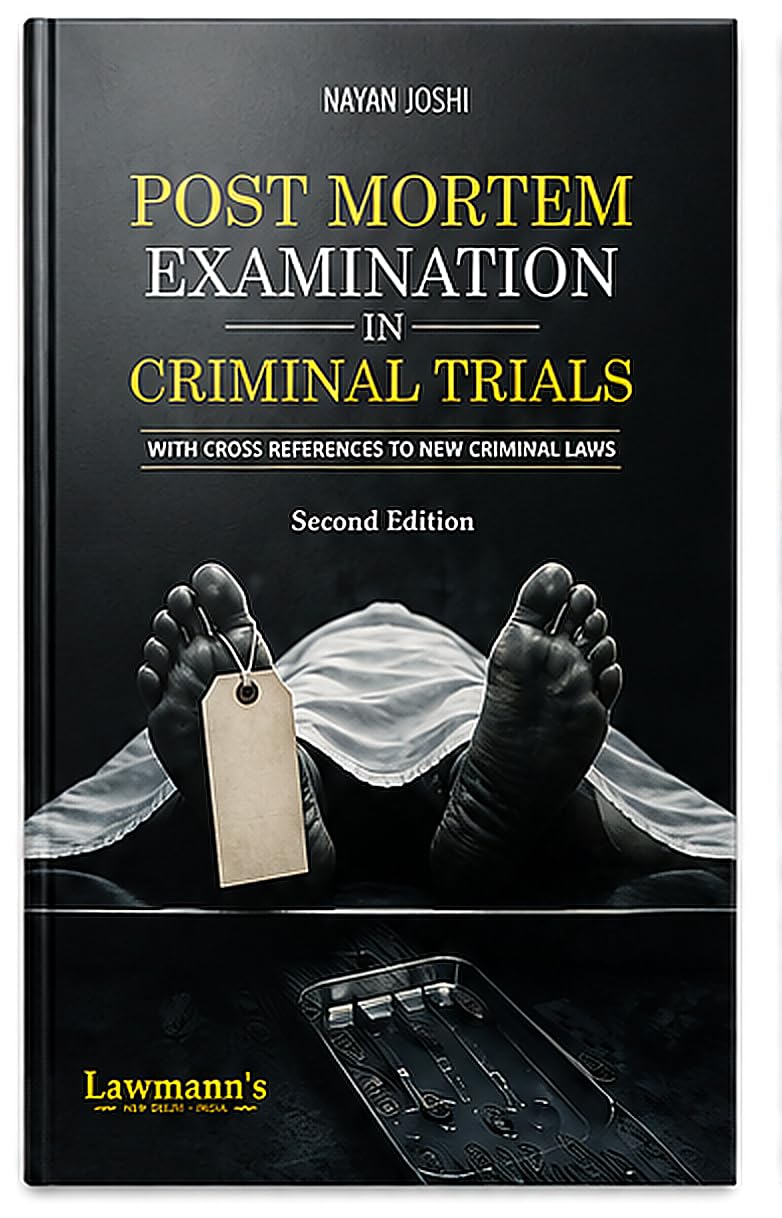
Lawmann's Post Mortem Examination in Criminal Trials With Cross References to New Criminal Laws by Nayan Joshi - 2nd Edition 2027
| Author : | NAYAN JOSHI |
|---|
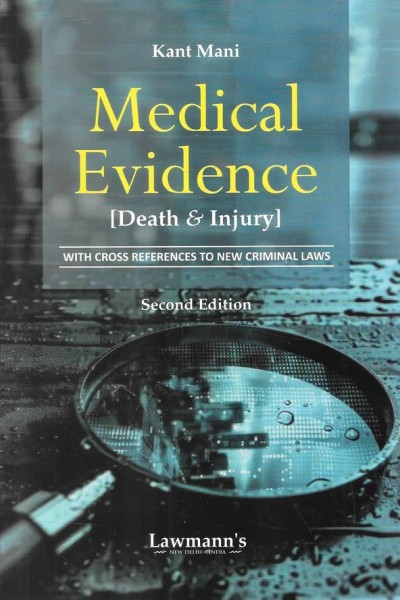
| Lawmann's Post Mortem Examination in Criminal Trials by Nayan Joshi, Second Edition 2027, is a practical work on the evidentiary value of the medico-legal post-mortem report, with cross references to the Bharatiya Nyaya Sanhita, the Bharatiya Nagarik Suraksha Sanhita and the Bharatiya Sakshya Adhiniyam. It covers unnatural and suspicious deaths, police and magisterial inquest, the conduct and contents of the autopsy, estimation of time since death through rigor mortis, livor mortis, algor mortis and decomposition, the interpretation of ante-mortem and post-mortem injuries and their correlation with the weapon alleged, asphyxial deaths, poisoning, burn and dowry deaths and custodial deaths, medical examination in sexual offences, proof of the report and the expert witness, examination and cross-examination of the medical officer, the settled approach where medical evidence conflicts with ocular evidence, and exhumation. Hardbound, English, ISBN 9789349586185. |


Tags: Forensic Science, Criminal Trial, Medical Evidence, Medico legal
Lawmann's Post Mortem Examination in Criminal Trials — With Cross References to New Criminal Laws by Nayan Joshi, published by Lawmann's, New Delhi, is the Second Edition, 2027 of a practical work on the evidentiary value of the medico-legal post-mortem report in criminal proceedings. Hardbound, English.
In most cases of homicide, dowry death, custodial death or suspicious death, the post-mortem report is the first document the court reads and the last one the defence attacks. Yet it is written by a doctor, in the vocabulary of forensic medicine, for a reader who is a lawyer. The gap between the two is where cases are won and lost — over the time since death, over whether an injury was ante-mortem or post-mortem, over whether the weapon suggested by the autopsy matches the one recovered, over whether the medical evidence corroborates the eyewitness or contradicts him.
This book is written to close that gap. It takes the post-mortem report as a legal document: how it is prepared, how it should be read, how it is proved, how the medical witness is examined and cross-examined, and how the courts have in fact appreciated autopsy findings. The second edition adds cross references to the new criminal laws — the Bharatiya Nyaya Sanhita, 2023, the Bharatiya Nagarik Suraksha Sanhita, 2023 and the Bharatiya Sakshya Adhiniyam, 2023, all in force from 1 July 2024 — so that the procedural and evidentiary provisions governing inquest, autopsy and expert evidence can be found under their current numbering.
Key Features
- Second Edition, 2027, published by Lawmann's, New Delhi
- Cross references to the new criminal laws — BNS, BNSS and the Bharatiya Sakshya Adhiniyam
- Treats the post-mortem report as evidence, not as a medical text
- Covers preparation, interpretation and judicial appreciation of autopsy findings
- Connects forensic evidence to investigation, examination of witnesses and trial strategy
- Written for the courtroom — usable by a lawyer with no medical training
- Hardbound · English · ISBN 9789349586185
Coverage
Death and the Law. The legal concept of death, unnatural and suspicious deaths, and the circumstances in which a post-mortem examination becomes necessary.
Inquest and the Investigating Agency. The inquest report, police and magisterial inquests, the duties of the investigating officer, and the procedure for sending a body for examination — with the corresponding provisions of the Bharatiya Nagarik Suraksha Sanhita.
The Post Mortem Examination. How an autopsy is conducted and recorded, external and internal examination, the structure and contents of the report, and the matters on which the medical officer gives an opinion.
Time Since Death. Rigor mortis, livor mortis, algor mortis, decomposition and the stomach-contents method — the basis of the estimate, its margins of error, and the weight courts have given it when it conflicts with ocular evidence.
Injuries and Their Interpretation. Ante-mortem and post-mortem injuries; incised, lacerated, punctured and firearm wounds; blunt and sharp force trauma; burns; the correlation of injuries with the weapon alleged, and the significance of defence wounds.
Causes of Death in Issue. Asphyxial deaths including hanging, strangulation and drowning; poisoning and the role of the chemical analyser's report; burn deaths and dowry death cases; custodial deaths; and deaths in road accidents.
Sexual Offences and Medical Examination. The medical examination of the victim and of the accused, the evidentiary value of the findings, and the statutory provisions governing such examinations.
Proof of the Report and the Medical Witness. How the post-mortem report is brought on record, the expert witness provisions of the Bharatiya Sakshya Adhiniyam, examination-in-chief of the medical officer, and the lines of cross-examination that are open to the defence.
Medical Evidence against Ocular Evidence. The settled approach of the Supreme Court and the High Courts where the autopsy findings and the eyewitness account do not agree — when medical evidence displaces direct testimony, and when it does not.
Exhumation and Second Autopsy. The circumstances in which a body is exhumed, the procedure followed, and the evidentiary value of a re-examination.
Who Should Buy This Book?
- Criminal advocates on both sides of the record, in trial and appellate work
- Public prosecutors and law officers
- Judicial officers trying sessions cases
- Police and investigating officers, and police training academies
- Forensic medicine professionals and medical officers who depose in court
- LL.B., LL.M. and forensic science students
- Candidates for judicial service, APO and public prosecutor examinations
- Law college, police academy and institutional libraries
Why Choose This Book?
Books on forensic medicine are written for doctors; books on criminal procedure rarely go beyond noting that the post-mortem report is admissible. This one sits in between, which is exactly where the practitioner stands when a sessions case turns on an autopsy. It explains the medicine only so far as the lawyer needs it, and then turns to what matters in court — proof, appreciation and cross-examination.
The second reason is the cross-referencing. Inquest, expert evidence and the examination of the accused and the victim are all governed by provisions that have been renumbered by the BNSS and the Bharatiya Sakshya Adhiniyam, while the case law still cites the Code of Criminal Procedure and the Evidence Act. This edition carries both, so the authority remains usable.
The third is practicality. The treatment of medical evidence against ocular evidence, and the material on cross-examining the medical officer, are the parts of the subject a practitioner actually has to argue, and they are set out here in a form that can be taken into court.