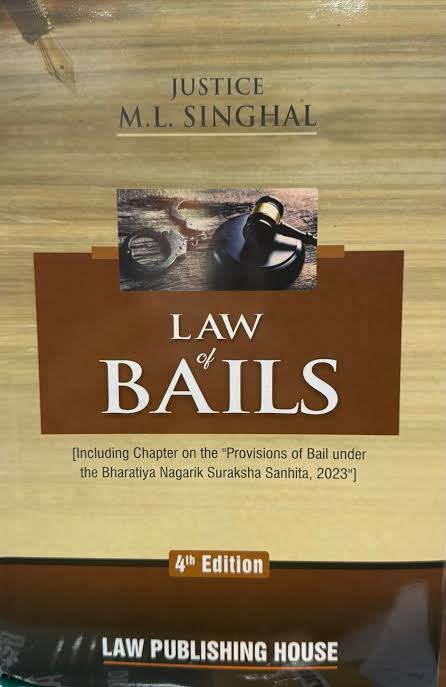
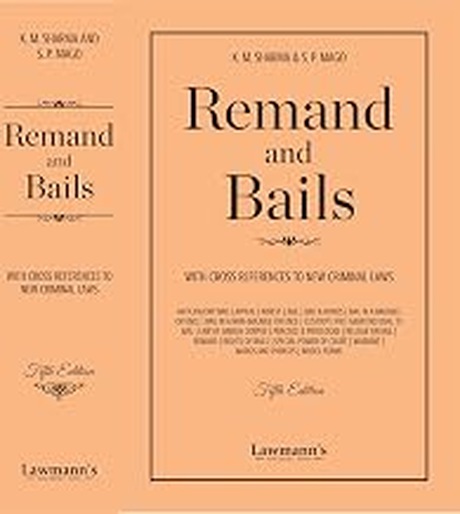
Lawmann's Remand and Bails With Cross References to New Criminal Laws - 5th Edition 2026
| Author : | Sharma & Mago |
|---|
| Lawmann's Remand and Bails with Cross References to New Criminal Laws by K. M. Sharma and S. P. Mago, Fifth Edition 2026, is a practitioner's work on remand and bail written against the Bharatiya Nagarik Suraksha Sanhita, 2023, which replaced the Code of Criminal Procedure on 1 July 2024. It covers arrest and the rights of the arrested person, production before a magistrate within twenty-four hours and the first remand, the distinction between police and judicial custody and the altered custody scheme under the Sanhita, the indefeasible right to default bail and the computation of the statutory period, regular bail in bailable and non-bailable offences and successive applications, anticipatory bail and interim protection, the restrictive bail provisions of the NDPS Act, UAPA, PMLA, POCSO and the SC/ST Act, bail bonds, sureties and conditions, and the cancellation of bail and forfeiture of bonds. English, ISBN 9789349586192. |


Tags: Bail, Bharatiya Nagarik Suraksha Sanhita(BNSS), Code Of Criminal Procedure, Criminal Trial
Lawmann's Remand and Bails — With Cross References to New Criminal Laws by K. M. Sharma and S. P. Mago, published by Lawmann's, is the Fifth Edition, 2026 of a practitioner's work on the two applications a criminal lawyer makes most often and can least afford to get wrong. English.
Remand and bail are where a criminal case is really decided for the person inside it. Whether an accused spends the next two years in custody or outside it rarely turns on the merits; it turns on how the first remand was resisted, whether the statutory period was counted correctly, whether the right provision was invoked, and whether the application was argued on the considerations the court is actually required to weigh. These are matters of practice, and they are learned either from a book like this one or the hard way.
The Fifth Edition is written against the new criminal law framework. The Bharatiya Nagarik Suraksha Sanhita, 2023 replaced the Code of Criminal Procedure with effect from 1 July 2024, carrying the provisions on arrest, custody, remand, default bail, anticipatory bail and bonds into a new numbering, with some substantive changes — including a statutory cap on the detention of first-time offenders. The case law, meanwhile, still cites the old sections. The cross references to the new criminal laws are what allow a practitioner to take an existing authority into court and point to the provision it now corresponds to.
Key Features
- Fifth Edition, 2026, published by Lawmann's
- Cross references to the new criminal laws — BNSS, BNS and the Bharatiya Sakshya Adhiniyam
- Covers remand and bail together, as they arise in a real case
- Treatment of bail under the special statutes with their restrictive conditions
- Written for use at the stage it matters — the remand hearing and the bail application
- Supported by the leading Supreme Court and High Court authority
- English · ISBN 9789349586192
Coverage
Arrest and the Rights of the Arrested Person. When arrest is permitted and when a notice of appearance suffices, the grounds of arrest, information to a relative, the right to counsel, medical examination, and the consequences of an illegal arrest.
Production and First Remand. The requirement of production before a magistrate within twenty-four hours, what the magistrate must satisfy himself of, the material the investigating officer must place on record, and the grounds on which a first remand can be resisted.
Police Custody and Judicial Custody. The distinction between the two, the periods for which each may be granted, the altered scheme for police custody under the Bharatiya Nagarik Suraksha Sanhita, extension of remand, and remand in absentia and by video conferencing.
Default Bail. The indefeasible right to bail on the failure to file a charge-sheet within the prescribed period, the computation of the period, the effect of filing an incomplete charge-sheet, and the stage at which the right is exercised and lost.
Regular Bail. Bail in bailable and non-bailable offences, the considerations governing the grant or refusal of bail, the recording of reasons, successive bail applications and change of circumstance, and bail after conviction and pending appeal.
Anticipatory Bail. The scope of pre-arrest bail, the conditions that may be imposed, its duration, interim protection, and the position where the offence falls under a special statute.
Bail under Special Statutes. The restrictive bail provisions of the NDPS Act, UAPA, PMLA, POCSO, the SC/ST (Prevention of Atrocities) Act and the other special laws — the twin conditions, the burden they place on the accused, and how the courts have applied them.
Bonds, Sureties and Conditions. Execution of bail bonds, the acceptance and discharge of sureties, the conditions a court may attach, and the form and quantum of security.
Cancellation and Forfeiture. Cancellation of bail and the grounds for it, the distinction between cancellation and setting aside an order granting bail, breach of conditions, forfeiture of the bond, and proceedings against sureties.
Related Proceedings. Non-bailable warrants and proclamation, bail on the surrender of an absconder, the position of juveniles, and the bail of women, the sick and the infirm.
Who Should Buy This Book?
- Criminal advocates, particularly juniors who appear at remand and bail stage
- Public prosecutors, additional public prosecutors and law officers
- Judicial officers and magistrates dealing with remand and bail daily
- Police and investigating officers, and police training academies
- Candidates for judicial service, APO and public prosecutor examinations
- LL.B. and LL.M. students taking criminal procedure and clinical courses
- Legal aid lawyers, prison visitors and undertrial-review committees
- Bar association and court libraries
Why Choose This Book?
Most criminal procedure commentaries treat bail as one chapter among fifty. For the lawyer who appears at the remand board, bail is not one chapter — it is the practice. A dedicated volume can do what a general commentary cannot: set out the considerations in the order a court applies them, cover the special statutes properly, and deal with the procedural points — computation of the default period, successive applications, cancellation — that decide real applications.
The second reason is the cross-referencing. Remand and bail are the parts of criminal procedure most densely covered by precedent, and almost all of it is stated in the old section numbers. A book that carries both the Bharatiya Nagarik Suraksha Sanhita provision and its predecessor keeps that body of authority usable.
The third is that it has survived to a fifth edition. A practitioner's book reaches that point only by being taken into court and found reliable there.